Bride Throwing Flowers over Her Head - Watercolor
When I pull a new embroidery file into my design software, I am rarely looking for just another pretty picture. I am looking for viability. I need to know if a design will hold up on a busy weekend at a craft fair, if it translates well from screen to fabric, and whether it offers enough visual weight to justify the time spent stitching it out. Today, I am putting Bride Throwing Flowers over Her Head - Watercolor through that exact paces. This is not just a digital asset; it is a potential cornerstone for a boutique wedding collection or a heartfelt personalized gift.
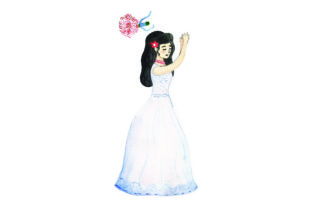
The first thing that strikes me about this watercolor-style artwork is its mood. It captures a specific moment of joy—the tossing of the bouquet—without feeling stiff or overly formal. The watercolor aesthetic lends itself beautifully to embroidery because it mimics the organic flow of thread. Unlike rigid vector graphics that can sometimes look harsh when stitched with satin stitches, the soft edges of a watercolor painting suggest fill stitches and textured runs that feel natural to the eye. For an embroidery designer, this means fewer awkward transitions and a more fluid final product.
Visual Personality and Design Layout
The composition centers on the bride in mid-action, surrounded by the scattered flowers. From a layout perspective, this creates a dynamic focal point. It is not static. When I evaluate a design for custom apparel or tote bag design, I look for movement. This design has it. The flying petals provide negative space opportunities and allow the eye to travel across the hoop, which is crucial for keeping the viewer engaged during the stitching process.
The level of detail in the watercolor effect suggests that this file contains intricate elements. In my experience, designs with this much artistic nuance often rely on a mix of stitch types. You might find satin stitch used for outlining key features like the dress hem or facial contours, while fill stitch handles the broader areas of color. However, because it is labeled as a watercolor design, there is likely a reliance on subtle color shifts. If you are converting this into a pure machine embroidery format, you must ensure that the digitizer has preserved enough texture so it does not flatten out into a muddy blob. The success of this project hinges on maintaining that delicate, painted feel through thread choice.
Real-World Application: Where Does This Fit?
I have been thinking about where Bride Throwing Flowers over Her Head - Watercolor would shine brightest in a small business context. My immediate thought is bridal party gifts. Imagine a set of embroidered patches or monogrammed tote bags given to bridesmaids. The watercolor style feels personal and artisanal, which aligns perfectly with the expectations of modern couples who value handmade touches over mass-produced items.
It also works exceptionally well for personalized gift scenarios. A custom sweatshirt embroidery featuring this scene could be a stunning graduation present or a "just married" keepsake. The theme is universally appealing but specific enough to feel unique. For an Etsy seller, this design bridges the gap between traditional wedding imagery and contemporary art styles. It allows you to market your shop as offering trendy, artistic pieces rather than generic clip-art replicas.
I also see potential in home decor. A pillow cover or a kitchen towel embroidered with this scene brings a romantic, celebratory vibe to a nursery or a newlywed’s home. The softness of the watercolor effect translates well to cotton blends and linen, fabrics commonly used for these items. It adds value to what might otherwise be a plain commodity, turning a simple tea towel into a conversation starter.
Technical Considerations and Fabric Compatibility
While the design is visually strong, we must address the technical realities of stitching it. Watercolor designs often contain fine gradients and small details. This requires careful planning regarding stitch density. If the density is too high, the fabric may pucker, especially on lighter materials. Conversely, if it is too low, the background may show through, ruining the watercolor illusion.
I strongly advise testing this design on scrap fabric before committing to a final product. Pay close attention to how the thread colors interact with your chosen base material. On dark fabric, you will need underlay stitches to make the colors pop, which might alter the intended softness of the original image. On light fabric, you have more freedom, but you must ensure the contrast is sufficient for the smaller details to remain visible after stitching.
Avoid using this design on highly textured fabrics like heavy wool or thick terry cloth unless you are experienced with stabilizers. The uneven surface can cause needle deflection, leading to misaligned stitches. Similarly, stretchy fabrics require a sturdy tear-away or cut-away stabilizer to prevent distortion. For curved surfaces like caps or hats, check the hoop size compatibility carefully. Large, detailed designs can be difficult to center and stitch accurately on a curved brim without specialized attachments.
Strategic Use Cases
- Wedding Gifts: Ideal for bridesmaid proposals, rehearsal dinner shirts, or honeymoon luggage tags.
- Craft Business: Perfect for high-margin boutique items like aprons or baby blankets.
- Digital Assets: As a digital embroidery file, it serves as a versatile template for mockups and print-on-demand previews.
Final Verdict for the Creative Entrepreneur
Bride Throwing Flowers over Her Head - Watercolor is a sophisticated choice for designers who want to elevate their wedding category offerings. It moves away from cliché hearts and rings toward something more emotive and artistic. The inclusion of multiple formats (SVG, PNG, EPS, DXF) makes it incredibly flexible. You can use the vector files for cutting vinyl on t-shirts, use the raster images for printable mockups, and utilize the embroidery file for direct stitching.
However, remember that execution is everything. A beautiful design on poor-quality thread or unstable fabric will disappoint customers. Always inspect the small details in your digitizing software. Zoom in. Check the corners. Ensure the running stitch paths are logical and won’t tangle. By taking these practical steps, you transform a good digital file into a profitable, professional finished product.
If you are looking to add a touch of romance and realism to your craft business, this design deserves a spot in your library. It is not just a picture of a bride; it is a capture of celebration, rendered in a style that invites the touch and warmth of handmade embroidery.